
Conformance monitoring
Evaluate actual execution against required, prohibited or sequence-dependent activities.
Continuously compare actual O2C behavior with intended process paths, policies and business rules while preserving evidence for every finding.
PISE evaluates conformance at case and object level, enriches each deviation with business impact and distinguishes informative exceptions from findings that require action.
Evaluate actual execution against required, prohibited or sequence-dependent activities.
Define transparent control logic using process, object and transactional attributes.
Prioritize deviations by affected value, customer, frequency and operational consequence.
Preserve the rule, event sequence, affected record, owner and resolution history together.
Actual execution is tested against approved sequences and business rules, with deviations ranked by value, recurrence and operational consequence rather than displayed as undifferentiated exceptions.
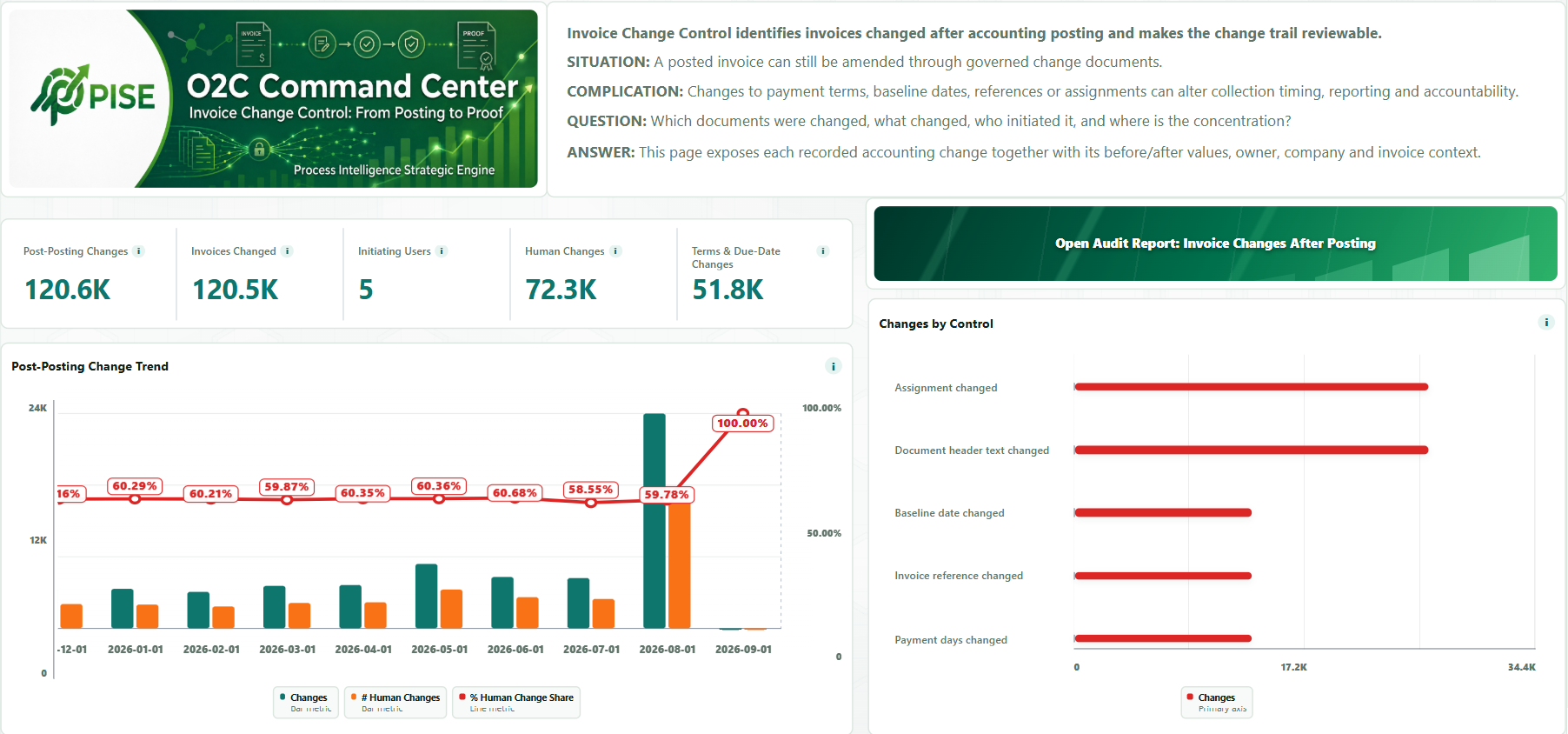
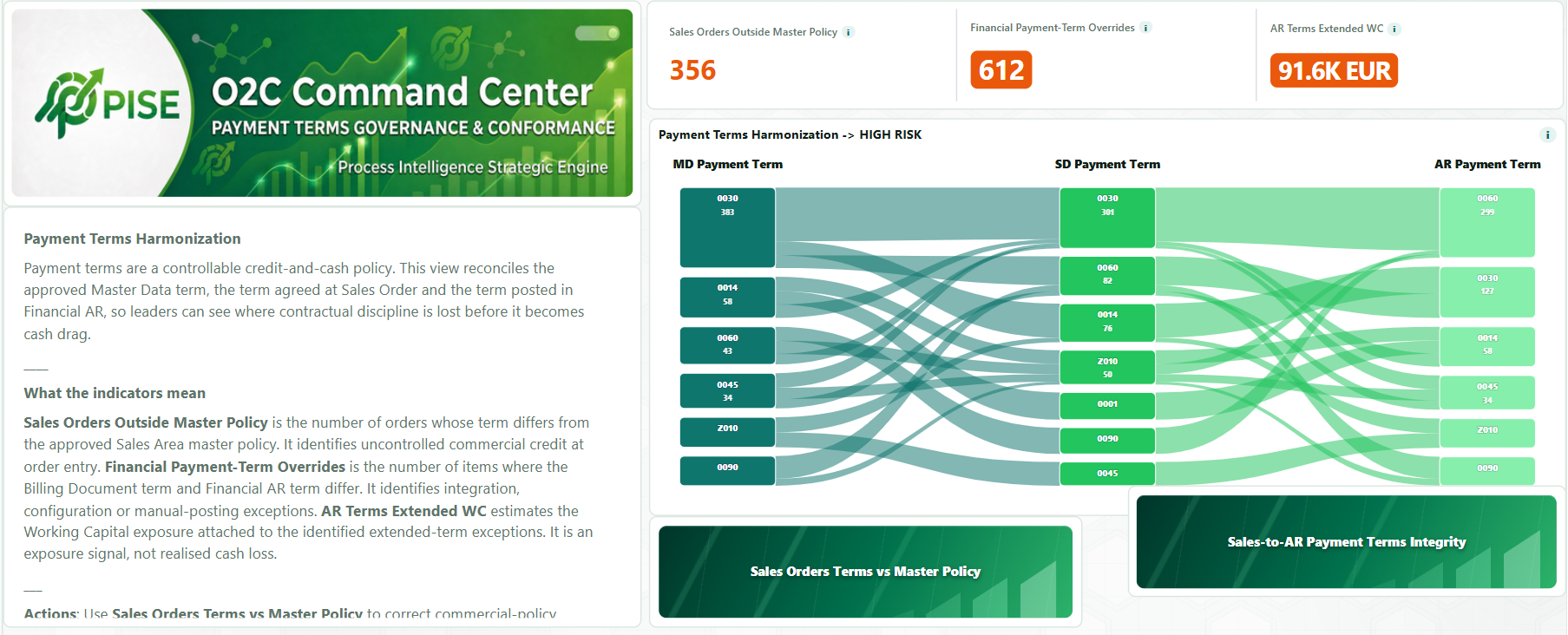
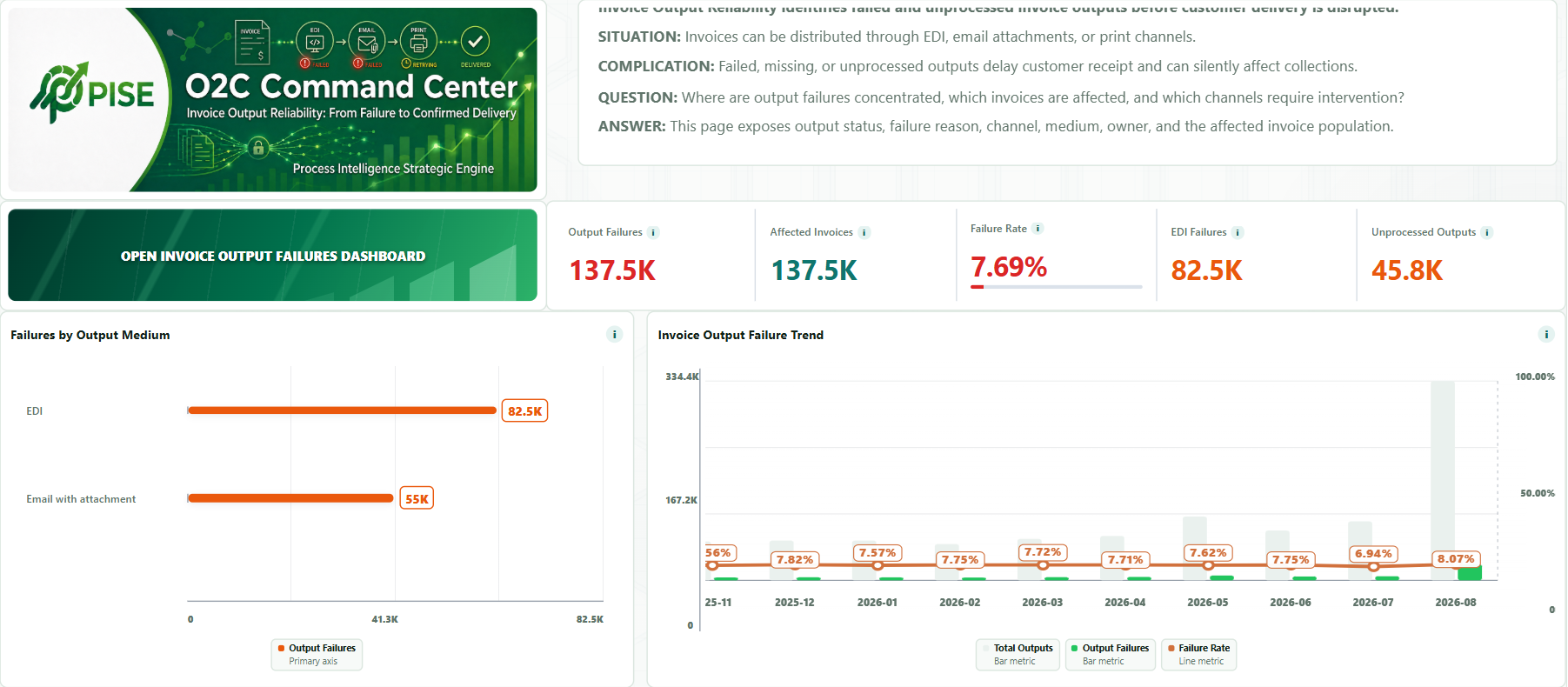
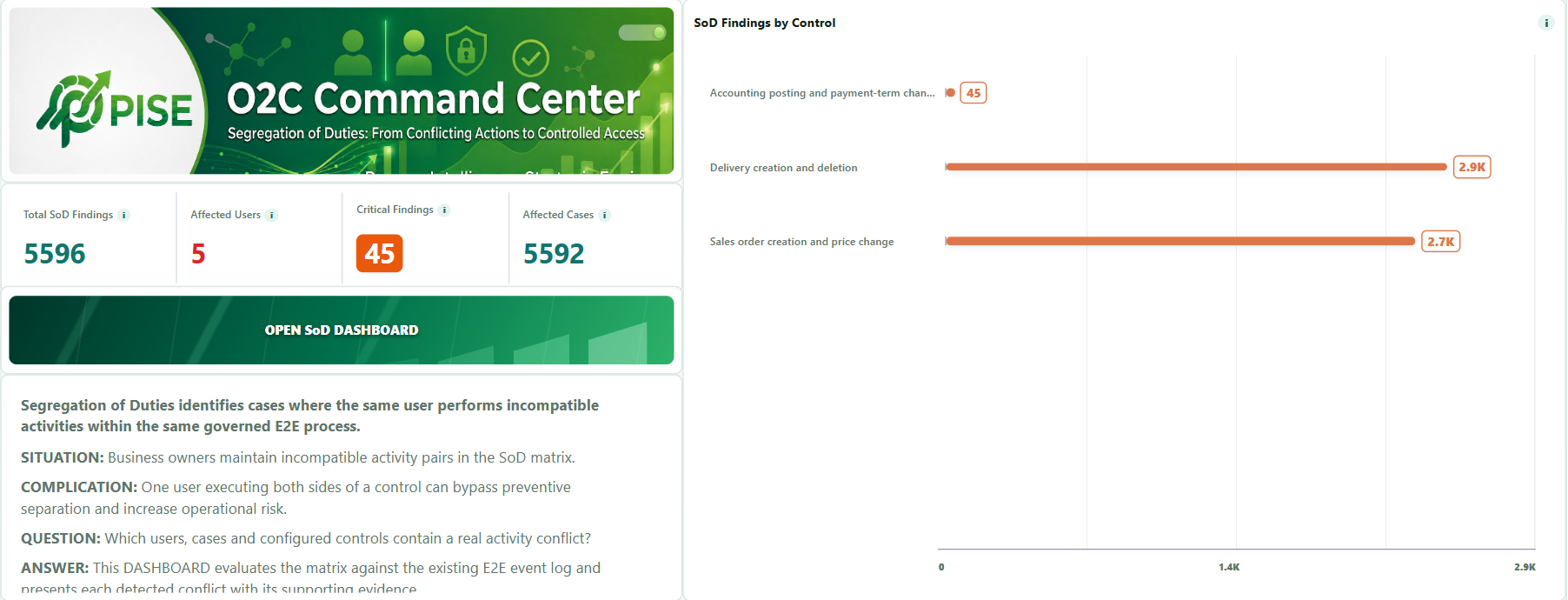
Control owners gain continuous visibility over material deviations and a governed path to resolution. Each finding retains the rule, event history, business context, owner and closure evidence.
Evaluate the complete available population instead of relying only on periodic samples.
Apply materiality and business context before a deviation becomes an action.
Preserve a connected record from detection and ownership through resolution and recurrence monitoring.
Rules continuously evaluate real process behavior, dashboards expose material exceptions, and governed tasks or automations close the control loop.
Ask business questions in natural language, explain metric movement and surface the evidence behind the answer.
Reconstruct the real O2C flow from event data and reveal variants, waiting time, rework and deviations.
Provide role-specific management views with governed KPIs, filters and drill-through to the affected population.
Convert prioritized insight into owned work with context, due dates, evidence and resolution status in one place.
Trigger notifications, assignments and governed workflows when defined business conditions are met.